Roof Repairs
Repairs across Hornsby and the Upper North Shore, where gutters and valleys blocked under heavy canopy cause most water entry.
Learn more →Tile roof restoration across Hornsby and the Upper North Shore. Moss removal, ridge rebedding, flexible repointing and recoating. Free inspection.
A tile roof usually fails slowly and visibly. The ridge caps go first, mortar turning sandy and dropping into the gutter. Then the surface coating chalks off the tiles. Then the moss takes the shaded southern plane, and water starts finding its way under caps that are no longer sealed.
Restoration deals with all of that without replacing the roof. It is the right answer for a very large number of Upper North Shore houses, and a free inspection will tell you whether yours is one. Call (02) 9000 1127.
Broken and slipped tiles replaced, valley condition checked, flashings assessed. There is no point coating a roof over a cracked tile.
Lifting moss, lichen, grit and the accumulated organic film that builds up under heavy canopy. Gutters and downpipes get cleared of the resulting debris rather than left full of it.
Caps lifted and re-laid on fresh mortar where the old bed has crumbled. This is the structural part of the job and it is where cheap quotes cut corners.
A flexible pointing compound over the bed, which moves with the roof instead of cracking out the way rigid mortar does.
A primer or sealer, then coats of membrane in the chosen colour. This restores the surface and the appearance, and sheds water the way a new tile does.
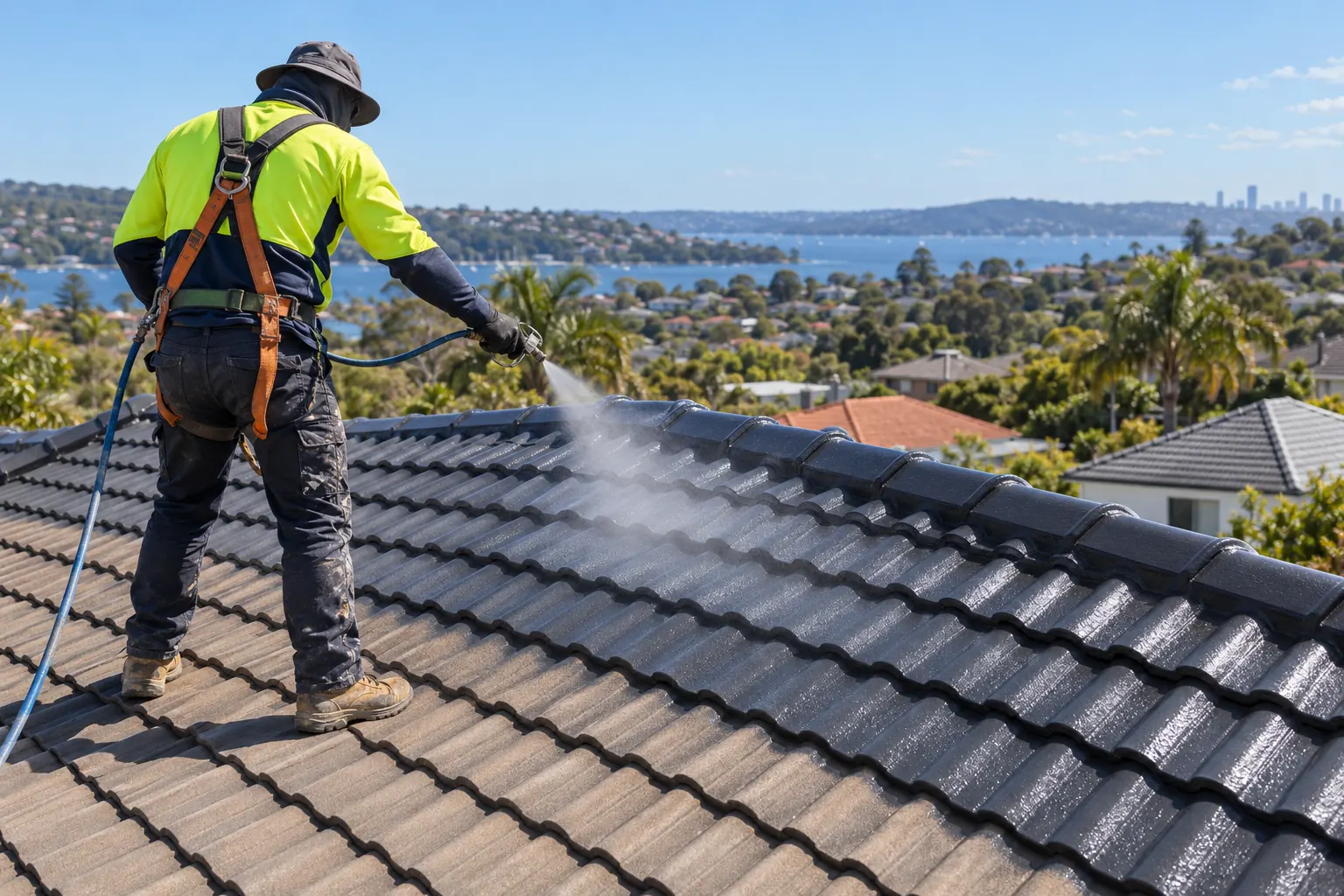
Shade is the underrated factor. A roof under mature eucalypts through Normanhurst, Westleigh or Berowra Heights never fully dries on its southern planes. Permanently damp tile surfaces grow lichen, lichen holds more moisture, and the cycle accelerates.
Add the physical load: falling limbs crack tiles, possums and birds work at loose caps, and the fine leaf litter that washes down the roof lodges in the laps. None of it is unusual, and all of it is manageable, but it means tile roofs up here reach the restoration point sooner than roofs on an open block out west.
We would rather turn work down than take money for a job that will not hold. Restoration is the wrong call when:
In those cases a full roof replacement is the better spend and we will say so and quote it instead.
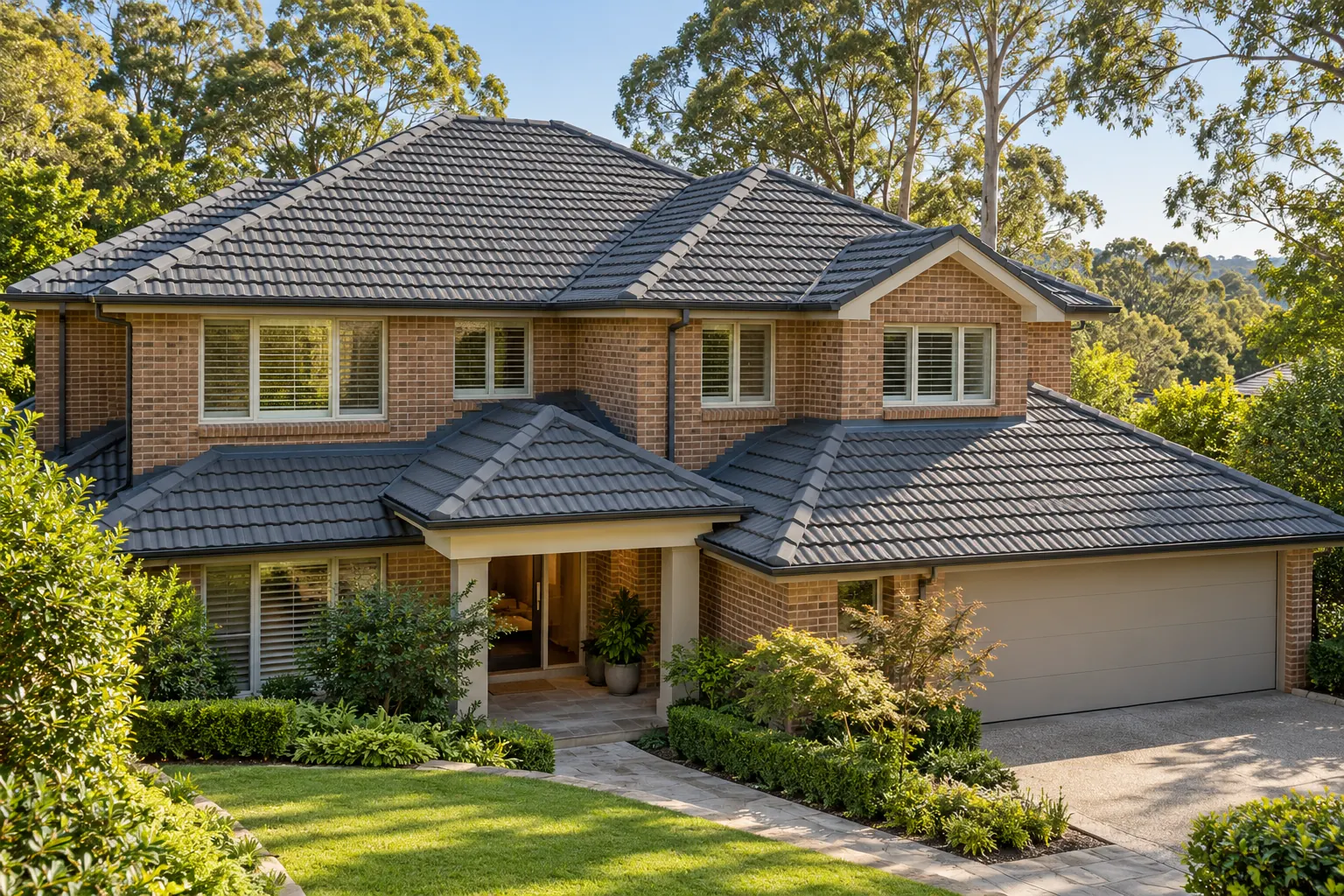
Concrete tile — the post-war and 1960s to 1980s housing across Asquith, Mount Colah, Hornsby Heights and Berowra Heights. These restore extremely well, because the tile body is usually fine and it is the surface coating and pointing that have failed.
Terracotta — the Federation and inter-war roofs through Beecroft, Cheltenham, Wahroonga and Normanhurst. Terracotta is not painted the way concrete is; restoration here is about cleaning, replacing broken tiles, rebedding and repointing, and sometimes a clear or coloured glaze treatment. Done badly it looks wrong on a heritage street, so it is worth being particular.
Call (02) 9000 1127 and we will tell you which approach your roof needs.
Most restorations run over several days: clean, dry, repair and rebed, point, then coat. Weather dictates the schedule, since the coating needs dry conditions to cure. You can live in the house throughout. Expect noise on the roof, a clean-up at the end, and the gutters cleared before anyone leaves.
Price follows roof area, pitch, how much repair work the tiles need, the length of ridge and hip lines to be rebedded, and access. A sprawling single-storey roof with long hip runs costs differently from a compact two-storey one, even at the same floor area. Difficult access around established trees adds time.
We give you a free inspection, photographs of what we found, and an itemised written quote. No obligation, no follow-up pestering, and completed work carries a written workmanship warranty.
We restore tile roofs throughout Hornsby and the Upper North Shore, including Waitara, Normanhurst, Thornleigh, Pennant Hills, Mount Colah, Berowra and Berowra Heights.
Ring (02) 9000 1127 or book a free inspection. If your roof is better off being left alone for another two years, we will tell you that too.
Repairs across Hornsby and the Upper North Shore, where gutters and valleys blocked under heavy canopy cause most water entry.
Learn more →Full re-roofing for Federation and mid-century homes on the large treed blocks around Hornsby.
Learn more →Colorbond roofing across Hornsby, Berowra and the Upper North Shore, including non-combustible detailing near bushland.
Learn more →Gutter replacement and ember-rated leaf guard across Hornsby, where leaf load and bushfire risk are the same job.
Learn more →Storm and fallen-limb response across Hornsby and the Upper North Shore, make-safe first.
Learn more →Roof inspections and written reports across Hornsby, including gutter and roof-line assessments at the bushland interface.
Learn more →Both, eventually. Moss and lichen hold moisture against the tile surface and into the laps, which keeps the roof permanently damp under a canopy that already blocks the drying sun. On concrete tiles that accelerates surface loss, and the debris washes into gutters and valleys. It is worth dealing with, but pressure cleaning alone without rebedding and repointing is a cosmetic result that will not last.
Rebedding means lifting the ridge and hip caps and re-laying them on a fresh mortar bed, which is structural. Repointing is the flexible compound applied over that bed to seal and finish it. If the caps are loose or sitting unevenly you need both. If the bed is still sound and only the pointing has gone chalky and cracked, repointing alone can be enough, and we will tell you which it is.
It stops the leaks that come from failed pointing, lifted caps, cracked tiles and a tired surface, which is most of them on an ageing tile roof. It does not fix a corroded valley tray, a badly formed flashing or a structural problem underneath, so those get quoted as part of the work rather than being papered over. The inspection tells you which category your roof is in.
A properly rebedded, repointed and recoated roof should give you a long stretch without major work. What shortens it on these blocks is not the coating, it is the leaf load: valleys and gutters that fill up again will undo the benefit. Build a twice-yearly clear into the routine, or fit leaf guard at the same time, and the restoration lasts the way it should.
Restoration needs dry weather and reasonable temperatures for the coating to cure, so the work is scheduled around the forecast rather than the calendar. Mild, dry winter stretches up here are perfectly workable. Long damp periods are not, and we would rather move a start date than apply a coating that will not bond properly.
Tell us what you need and we'll get straight back to you. Prefer to talk? Call (02) 9000 1127 and speak to someone local.
Call (02) 9000 1127